
What You Need to Know: The Impact of Flooding on Rice Harvesting in Kendari
What You Need to Know: Recent flooding in Kendari, Sulawesi Tenggara, has created significant challenges for rice farmers, disrupting the harvest process and threatening the local agricultural economy. The event, which occurred in late May 2026, left thousands of hectares of farmland submerged, with immediate effects on crop yields and community livelihoods. Understanding the full scope of the problem, the measures being taken to address it, and its long-term implications is essential for grasping the severity of the situation. This article provides a comprehensive overview of how the flood has impacted rice farming, the recovery efforts underway, and the broader consequences for the region.
The Flood’s Devastating Impact on Rice Production
What You Need to Know: The flood, which began on May 9, 2026, submerged approximately 151 hectares of rice fields in the Amohalo village area, affecting a total of 320 hectares of farmland. This inundation has caused partial damage to crops, with 73 hectares deemed unsuitable for harvest and the remaining 78 hectares requiring careful assessment. The waterlogged conditions have not only delayed the harvest but also reduced the quality of the rice, leading to concerns about market readiness and food security. Farmers, many of whom rely on rice as their primary income source, face financial strain as they attempt to salvage what remains of their crops.
What You Need to Know: The prolonged exposure to water has led to issues such as root rot and nutrient depletion in the soil, further complicating recovery efforts. Experts warn that without timely intervention, the affected fields may take months to regain productivity. The situation highlights the vulnerability of agricultural communities to extreme weather events, which are becoming more frequent due to climate change. Local authorities and farmers are now working together to mitigate the damage and explore ways to protect future harvests.
Recovery Efforts and Community Resilience
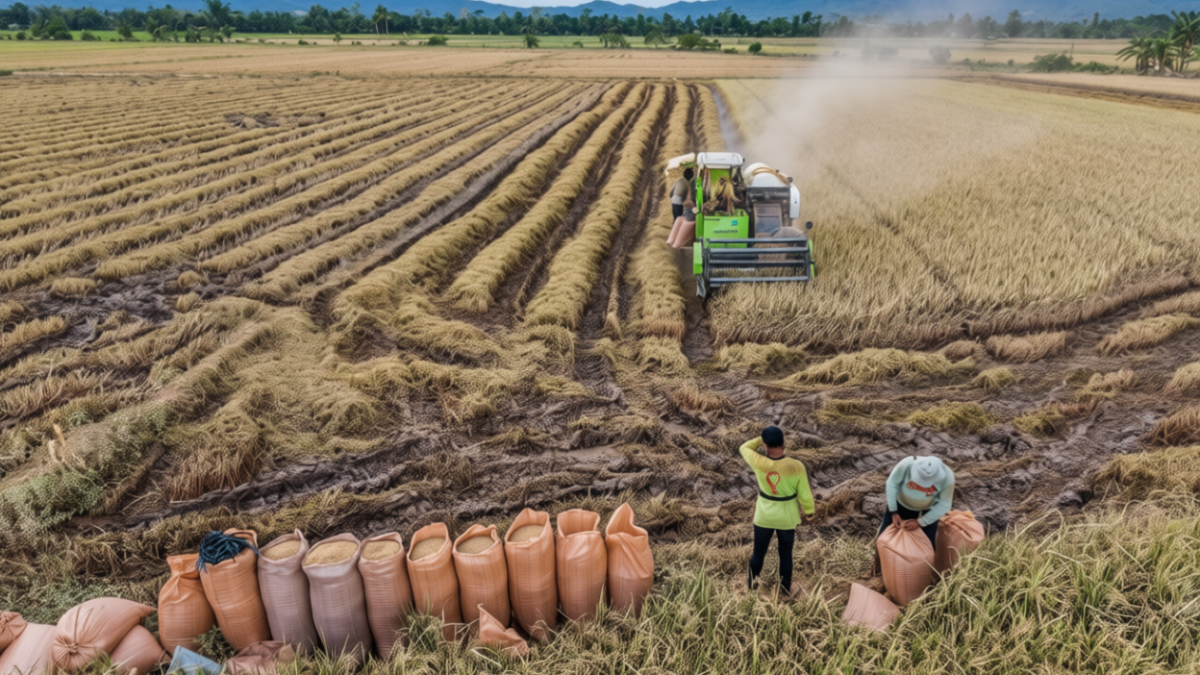
What You Need to Know: In the aftermath of the flood, the local government and agricultural organizations have launched initiatives to support affected farmers. These include the deployment of heavy machinery to extract water from the fields, the provision of temporary storage facilities for harvested rice, and the coordination of relief efforts to distribute essential supplies. The use of combine harvesters, as seen in the photos, has been critical in speeding up the collection of rice from partially damaged areas, helping to minimize additional losses.
What You Need to Know: Community resilience has also played a vital role in the recovery process. Farmers have been organizing themselves to repair irrigation systems, clear debris, and assess the condition of their crops. Some have resorted to manual labor to salvage the remaining rice, demonstrating their determination to rebuild. Despite the challenges, there is a collective effort to restore normalcy to the farming cycle, with plans to resume planting for the next season as soon as possible.
Challenges and Long-Term Implications
What You Need to Know: The flood has not only caused immediate damage but also raised concerns about the long-term sustainability of rice farming in Kendari. The loss of 151 hectares of farmland has forced the community to reconsider their farming practices and invest in better flood management infrastructure. Local leaders emphasize the need for improved drainage systems, elevated planting beds, and early warning mechanisms to prevent similar disasters in the future. These measures are seen as essential for safeguarding the region’s food supply and economic stability.
What You Need to Know: The situation also underscores the importance of agricultural insurance and financial support for small-scale farmers. Without such resources, many are struggling to recover their losses, as the cost of repairing fields and purchasing new seeds adds to their financial burden. Additionally, the disruption to the harvest has affected the availability of rice in local markets, leading to slight price increases and supply shortages. This has created a ripple effect, impacting not just the farmers but also the broader community that depends on rice as a staple food.
Environmental and Economic Consequences
What You Need to Know: Beyond the immediate agricultural losses, the flood has had broader environmental consequences. The prolonged submersion of fields has led to soil erosion and the loss of fertile topsoil, which may take years to replenish. Water quality issues in the affected areas have also raised concerns about the safety of the rice being harvested. Environmental experts are urging local authorities to conduct soil and water tests to ensure that the crops meet safety standards for consumption and sale.
What You Need to Know: Economically, the flood has dealt a severe blow to the farming sector. With 73 hectares of fields unable to be harvested, the expected yield for the season has been reduced by nearly a quarter. This has resulted in lower income for farmers, who may need to seek alternative livelihoods until the next harvest. The government is working to compensate for these losses, but the scale of the damage remains substantial. The incident serves as a reminder of the need for diversified agricultural strategies to reduce dependence on single crops and enhance resilience against natural disasters.
What You Need to Know: As the recovery process continues, the focus remains on restoring the rice farming ecosystem in Kendari. Collaboration between farmers, local authorities, and agricultural experts is key to ensuring that the region can bounce back from this crisis. The situation also highlights the importance of climate adaptation measures, as the frequency of such floods is expected to rise in the coming years. With sustained efforts, the community hopes to mitigate the impact of future events and safeguard their food production for generations to come.